An electric motor, a petrol engine and a diesel engine, measured on efficiency
The three drivetrains differ in how much of their fuel reaches the wheels, where their torque arrives, and how many parts they need to do it. The efficiency gap is the largest of the three, and the least discussed.
Most comparisons of the three start with running costs and purchase price. Both move with tax policy and fuel duty, which differ by country and change by budget. The physical differences do not, and there are three of them.
Efficiency: where the energy goes
A combustion engine is a heat engine, and a heat engine throws most of its fuel away as heat. The US Department of Energy puts a conventional petrol car at roughly 16 to 25 per cent of the fuel's energy reaching the wheels. Diesel does better, in the region of 20 to 30 per cent, because it runs at a higher compression ratio and burns a denser fuel.
An electric drivetrain is not a heat engine. The Department of Energy puts battery electric cars at over 77 per cent of the electrical energy drawn from the grid reaching the wheels, once charging losses are counted.
That gap is not incremental. Three quarters of the fuel in a petrol car is warming the air, and that is the physics, not a tuning problem.
Two honest caveats. This is tank-to-wheel, so it says nothing about how the electricity or the fuel was produced; on a grid running on coal the well-to-wheel picture narrows considerably. And an electric car regains some braking energy, which a combustion car cannot, so the real-world gap in traffic is wider still than the cycle figures suggest.
Torque: where it arrives
A combustion engine makes almost no torque at rest. It has to be spinning, which is why it needs a clutch to get moving and a multi-speed gearbox to stay in its usable band. A diesel's band sits lower and narrower than a petrol engine's, which is why diesels pull well from low revs and run out of breath early.
An electric motor makes its maximum torque from zero rpm and holds it across a wide range. That is why almost every electric car has a single-speed reduction gear and no clutch at all: there is no band to keep it in. A range extender keeps a combustion engine on board but never connects it to the wheels, which is a fourth arrangement again.
Parts: what simply is not there
An electric drivetrain has no fuel tank, fuel pump, injectors, exhaust, catalytic converter, particulate filter, turbocharger, multi-speed gearbox, clutch, or oil and filter service. Diesel adds the most of any of the three, because modern emissions limits require particulate filtration and usually a urea dosing system on top.
This is the commercially interesting difference, and the reason it is worth a paragraph on a markets site. Those absent subsystems are supplier revenue, assembly labour and scheduled servicing, which is why the transition is contested by more of the industry than the makers alone.
Sources
Terms defined here
- Tank-to-wheel efficiency
- The share of the energy stored on board that reaches the wheels. It excludes what was spent producing the fuel or the electricity, which is the separate well-to-wheel question.
- Torque
- The twisting force at the driveshaft. What accelerates a car, as distinct from power, which is torque multiplied by how fast it is turning.
Related reading
Hybrid, plug-in, range extender: where the engine actually connects
Three drivetrains sold under one word. The difference that matters is whether the engine can drive the wheels at all, and how much battery sits behind it.
Updated 17 Sept 2026 · Explainer · 2 min
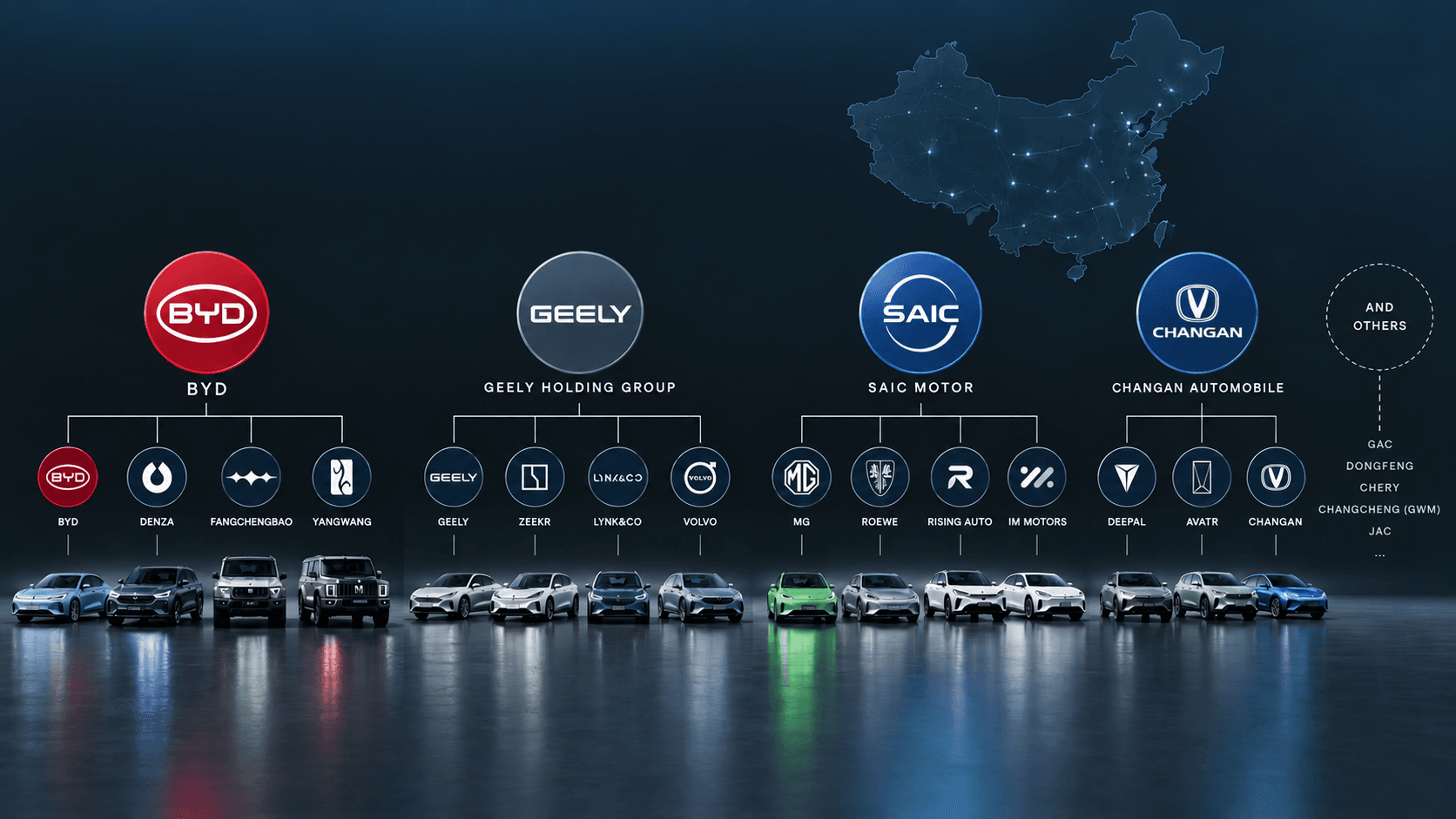
Chinese EV brands: who owns what
Denza, Yangwang, ONVO, MONA, Zeekr, Lynk & Co, MG, Avatr. Most of the names arriving in Europe belong to seven groups, one of which also owns Volvo, and one phone company that owns no carmaker at all.
12 Sept 2026 · Deep dive · 10 min
The one number the electric car investment case turns on
Battery cost per kilowatt-hour decides whether an electric car can be sold at a profit. The figure is quoted constantly and defined loosely, and cell price and pack price are not the same number.
Updated 17 Sept 2026 · Explainer · 2 min
More on BYD Co
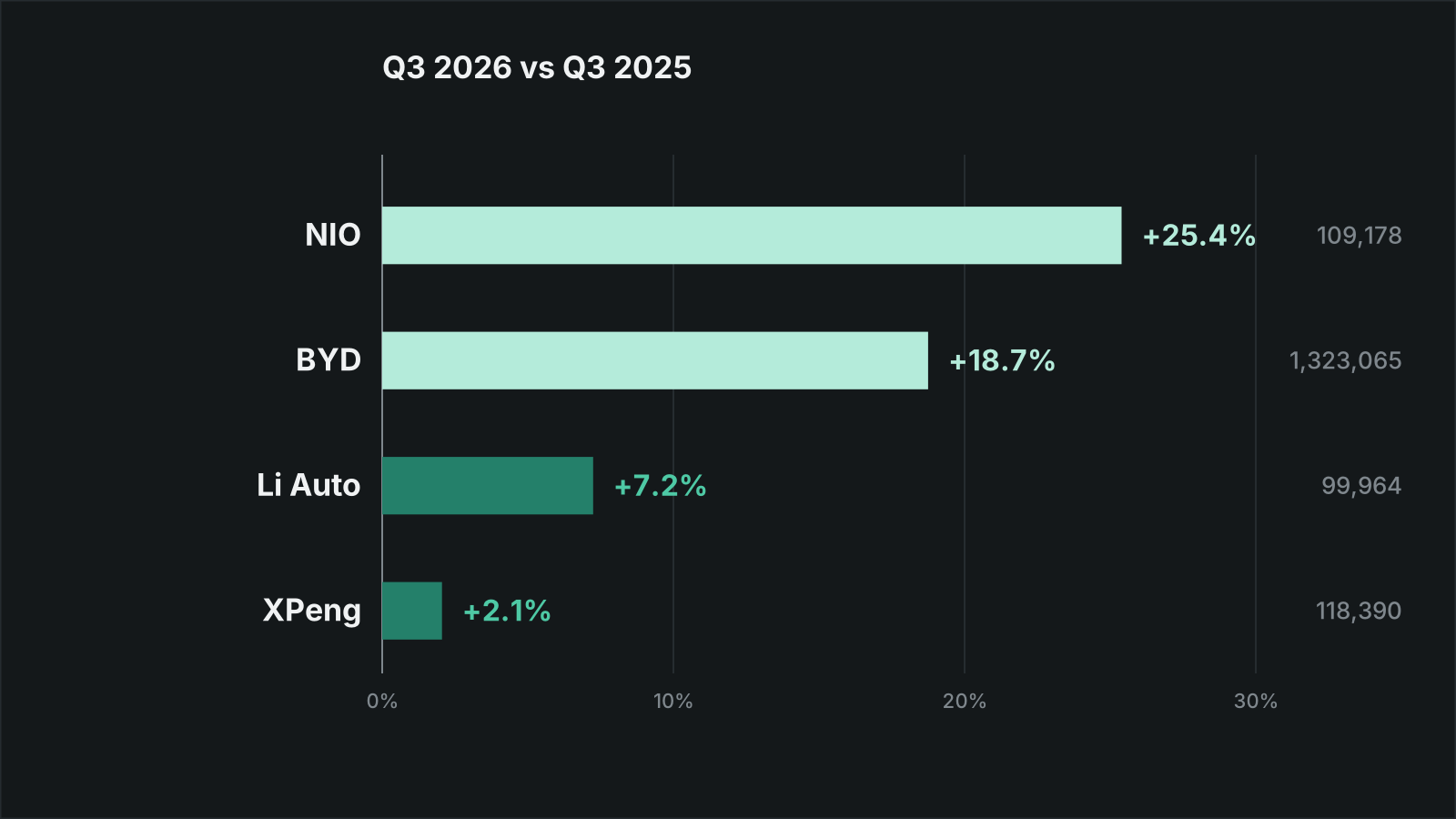
Q3 deliveries: NIO and BYD grew by double digits, XPeng and Li Auto did not
NIO delivered 109,178 vehicles in the third quarter (+25.4%) and BYD sold 1,323,065 (+18.7%). XPeng's 118,390 was up 2.1% and Li Auto's 99,964 up 7.2%. The growth came from NIO's premium brand and BYD's exports.
1 Oct 2026 · Analysis · 6 min
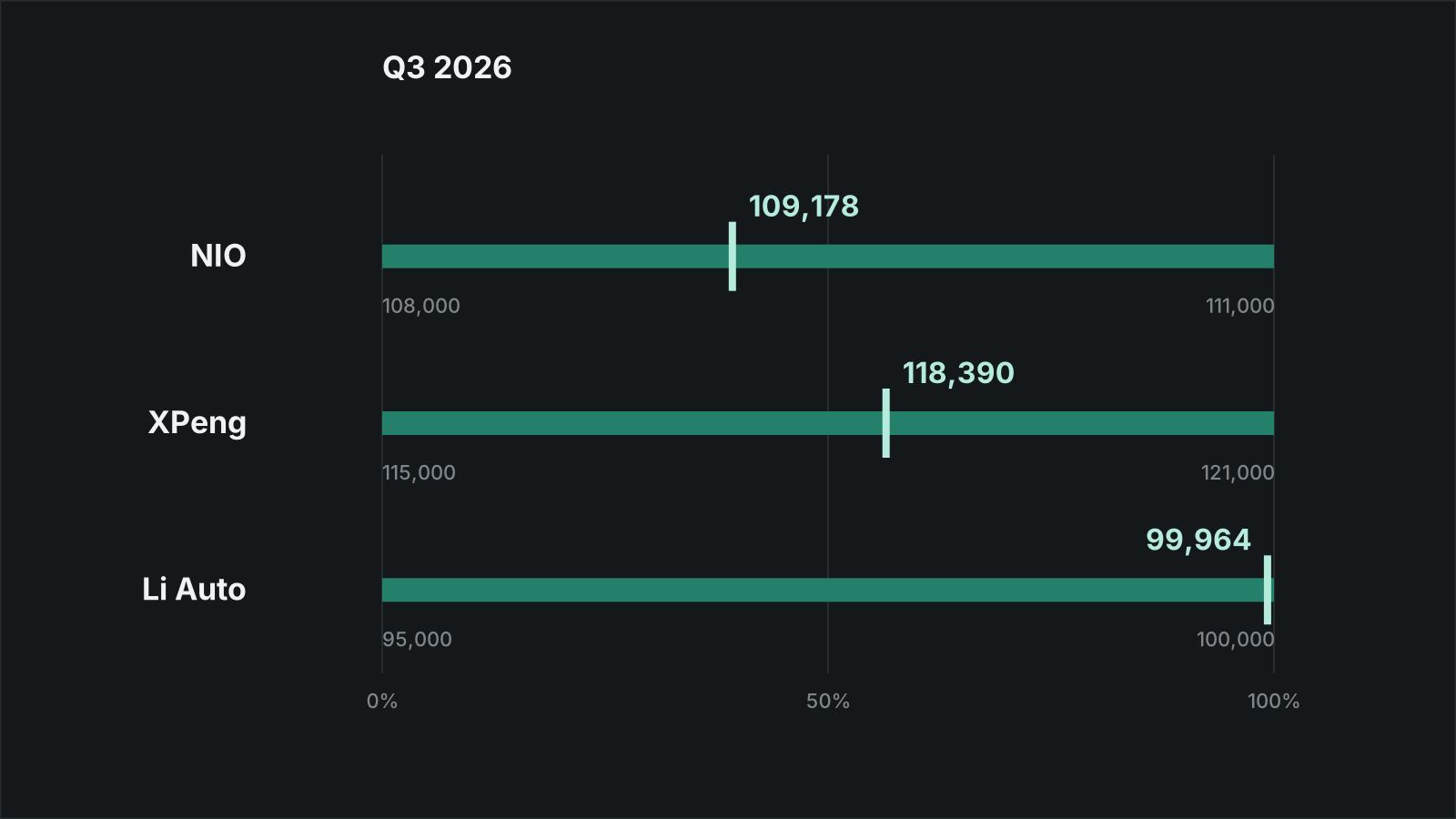
Q3 guidance scorecard: three hits, and Li Auto finished 36 vehicles from its ceiling
NIO, XPeng and Li Auto each delivered inside the third-quarter range they gave. NIO landed 39.3% of the way up its range, XPeng 56.5%, Li Auto 99.3%. All three set their ranges with part of the quarter already delivered.
1 Oct 2026 · Analysis · 6 min
From cell to pack, and what cell-to-pack took out
A car battery is built in three layers, and each one adds mass that stores no energy. Removing the middle layer is why a pack figure and a cell figure have moved apart.
Updated 17 Sept 2026 · Explainer · 2 min
More on Tesla
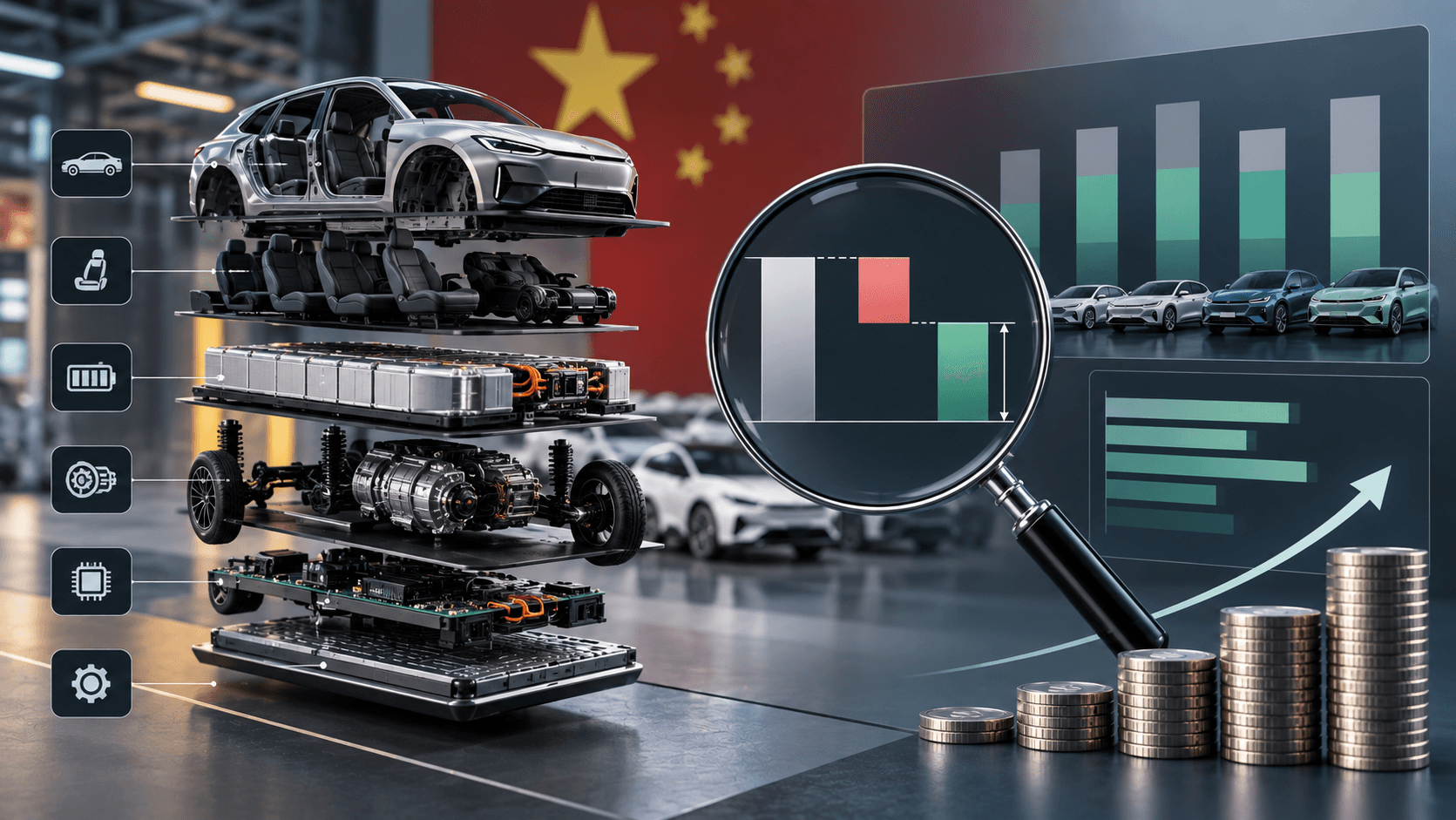
What EV gross margin actually measures, and why the Chinese makers report it differently
XPeng's gross margin rose from 17.3% to 20.7% over a year in which its cars got less profitable, not more. Both numbers come from the same filing. Here is how that works.
12 Sept 2026 · Deep dive · 8 min